Achieving LEED Gold is not just about pursuing certification. It is about making early, coordinated decisions that shape how a building performs over time. With the recent introduction of LEED v5, that approach is even more critical, as the framework places greater emphasis on decarbonization, occupant well-being, and long-term performance rather than late-stage point accumulation. Projects like Coulter Place, recently certified LEED Gold under LEED v4, and 1201 Callowhill, currently pursuing LEED Gold certification under the same framework, reflect how these decisions come together in practice across different multifamily developments.
Sustainability as a Design Strategy, Not a Checklist
Sustainability outcomes are driven by how decisions connect across a project, not by checking off individual credits. A holistic approach considers material sourcing, construction processes, and long-term building performance, rather than focusing on isolated strategies. At both Coulter Place and 1201 Callowhill, sustainability was treated as an integrated design priority from the outset, informing decisions across disciplines from the earliest phases rather than being applied later in the process.
Outcomes Are Determined Early
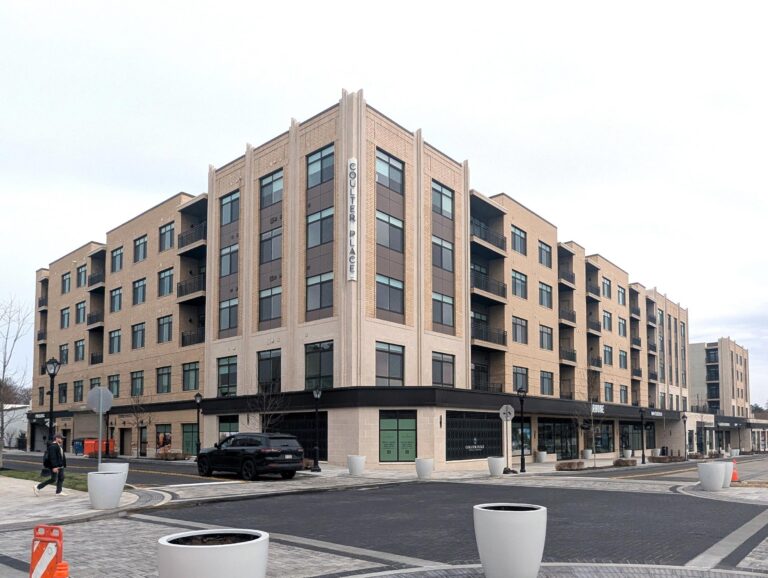
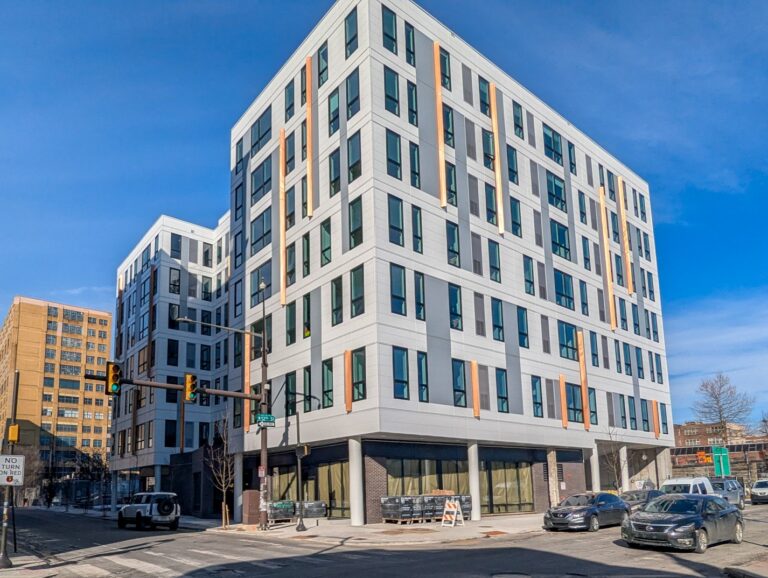
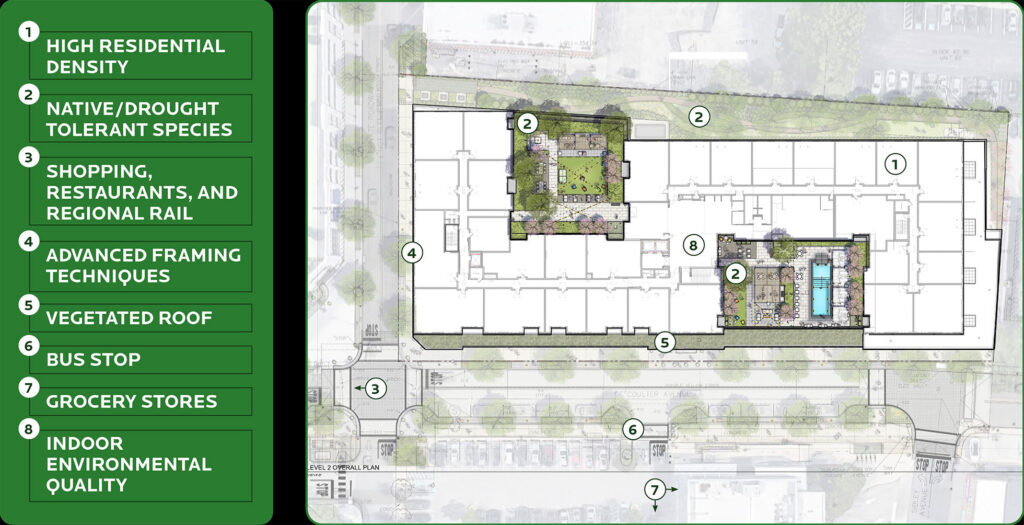
Many of the most impactful sustainability decisions are made before design is finalized. Site selection, access to transit, and early coordination between architects, engineers, contractors, and developers establish the foundation for performance, an approach that aligns with LEED v5’s increased emphasis on long-term outcomes rather than late-stage credit accumulation. Coulter Place’s location within walking distance of transit and daily amenities, along with 1201 Callowhill’s urban infill conditions, demonstrate how early decisions shape both environmental performance and long-term usability.
Site Planning and Design Shape Performance and Experience
Sustainability is not only measured in performance metrics, but in how a building is experienced day to day. Site planning, building orientation, and shared spaces all contribute to both environmental outcomes and resident well-being. At Coulter Place, courtyard spaces, landscape strategies, and stormwater management approaches support both environmental performance and the quality of the residential experience. At 1201 Callowhill, efficient use of an urban site reinforces how density and design can work together to support sustainable living.
Performance Comes From Systems Working Together
High-performance buildings rely on the coordination of envelope design, material selection, and building systems integration, an approach that becomes even more critical under LEED v5’s more holistic evaluation of building performance. Highly efficient HVAC, plumbing, and electrical systems are crucial, but also rely on a well-sealed, thermally efficient building envelope for optimal long-term performance. At Coulter Place, strategies such as air sealing and compartmentalization, efficient HVAC systems, and low-emitting materials contributed to strong performance outcomes across energy use, water efficiency, and indoor environmental quality. Similar approaches are being applied at 1201 Callowhill, reinforcing consistency in how these strategies, systems, and selections are integrated across projects.
Balancing Performance, Comfort, and Feasibility
Achieving LEED Gold requires balancing environmental performance with cost, constructability, and resident needs. Sustainable strategies must support long-term efficiency while maintaining project viability and usability. Across both Coulter Place and 1201 Callowhill, design decisions were made with this balance in mind, aligning environmental goals with resident comfort and operational performance. In some cases, sustainable strategies can also support project feasibility by enabling additional development potential through zoning or funding incentives. At 1201 Callowhill, for example, the project utilized a Green Building Zoning Bonus, increasing the allowable gross floor area by 50% in exchange for pursuing LEED Gold certification.
What Is Changing Under LEED v5
As sustainability standards evolve, LEED v5 introduces a greater emphasis on carbon reduction, resiliency, and long-term building performance. Higher levels of certification now place increased focus on electrification and reducing reliance on fossil fuels. These changes reinforce the importance of early, integrated decision-making, where sustainability is considered part of the overall design strategy rather than a separate objective.
Achieving LEED Gold is not about meeting a threshold. It is the result of coordinated decisions made throughout the life of a project, from early planning through construction and occupancy. Projects like Coulter Place and 1201 Callowhill demonstrate how this approach leads to consistent, repeatable outcomes, positioning sustainability as a fundamental part of multifamily design rather than an added layer.